 EN
EN

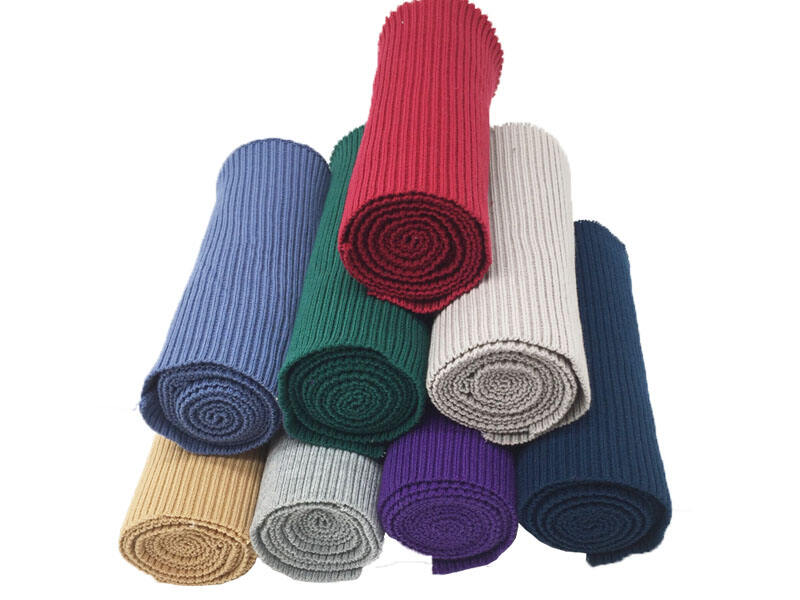
What Is Clothing Rib? Anatomy, Key Properties, and Why It Matters
Rib knit fabric is made by alternating knit and purl stitches side by side, which creates those characteristic vertical ridges we all recognize. What makes this construction so special is how it stretches across the width without losing stability along the length. The way these stitches lock together allows the fabric to bounce back quickly after stretching, something plain knits like jersey just can't match since they tend to droop or lose shape when stretched repeatedly. There are basically three main rib patterns out there: 1x1, 2x2, and 4x1. Each one behaves differently depending on what kind of performance characteristics are needed for specific clothing applications or industrial uses.
Structure Explained: How 1x1, 2x2, and 4x1 Rib Knits Create Stretch and Recovery
Starting with the basics, the 1x1 rib pattern works by alternating between single knit and purl stitches. This creates a light fabric that stretches nicely, which makes it great for things like sleeve cuffs and necklines that need some give but not too much. The way the tension balances out allows for around 40 percent stretching across the width before bouncing back to original shape. Moving on to the 2x2 setup, this one combines two knit stitches with two purl stitches. What happens is the formation of thicker vertical bands that hold up better over time. These are particularly useful for crew neck openings and waistbands since they maintain their shape even after repeated wear and washing. Compared to the 1x1 version, this 2x2 pattern actually stands up to compression about 30 percent longer while still keeping that all around flexibility we want. Then there's the asymmetrical 4x1 rib pattern, which has four knit stitches for every single purl stitch. This creates what's called directional stretch, meaning it stretches more in one direction than another. That makes it really handy for those tricky shaped areas in athletic wear where designers need both horizontal stretch and good vertical support at the same time.
| Pattern | Stretch Capacity | Recovery Strength | Common Applications |
|---|---|---|---|
| 1x1 | Moderate (~40%) | Balanced | Cuffs, lightweight hems |
| 2x2 | High (+30% vs 1x1) | Enhanced | Collars, heavyweight waistbands |
| 4x1 | Direction-specific | Targeted | Athletic panels, contour zones |
This mechanical “memory” arises from how knit and purl stitches interlock: during stretching, they pivot around shared loops and rebound precisely to their original positions—no external elastic required.
Core Functional Benefits: Elasticity, Shape Retention, and Breathability
The column-like structure of rib fabric gives it this amazing ability to stretch in multiple directions while still holding its shape better than regular jersey fabric. Tests have shown that ribbed edges keep about 97% of their original size even after being stretched 50 times, whereas plain knits only manage around 78%. Why does this happen? Well, look closely at those stitches – the little ridges and grooves actually work together like tiny anchors that stop the fabric from getting permanently squashed out of shape. Plus, all those bumps create natural gaps for air to flow through, making the fabric breathe better than flat knits by somewhere between 15% and 25%. That's why manufacturers rely so heavily on rib fabric for areas where clothes get stretched the most – think armholes, waistbands, and necklines. These spots need both flexibility and stability, plus they help regulate body temperature during wear.
Clothing Rib in Garment Construction: Cuffs, Collars, Waistbands, and Hems
Why Ribbed Trims Dominate High-Stress Areas — Engineering Fit and Durability
Rib knit works really well in parts of clothes that get stretched out a lot over time like cuffs, collars, waistbands, those little edges we call hems. The reason? Well, it creates what some might call engineered tension rather than just letting things stretch passively. Take regular jersey fabric for instance. It tends to stretch in one direction only and then sits there all loose and wrinkled. But rib knit has these alternating ridges going on, so it can stretch both ways and still bounce back to shape. That means the fabric stays snug against skin throughout normal wear and tear. We've all seen collars that start rolling down, hems that gradually work their way up, or cuffs that just droop after a few washes. Studies looking at textiles actually show something pretty interesting here too. Ribbed cuffs can handle about 40 percent more stretching back and forth compared to standard jersey before they start showing signs of wear. And there's another thing worth mentioning. The way the stitches lock together helps prevent seams from slipping apart at spots where stress builds up. This makes a big difference when it comes to how long a piece of clothing lasts overall.
Material Selection Guide: Matching Rib Type to Function
Choosing the right rib depends on the mechanical and aesthetic requirements of the application:
| Rib Structure | Ideal Application | Key Properties |
|---|---|---|
| 1x1 Rib | Cuffs, Hems | Highest crosswise stretch (up to 200%), lightweight recovery, soft drape |
| 2x2 Rib | Collars, Waistbands | Greater thickness and structural density; superior shape retention under load |
| 4x1 Rib | Athletic waistbands | Directional stretch: generous horizontal give with vertical stability |
For instance, 1x1 rib conforms effortlessly to wrists and ankles without constriction, while 2x2 rib supplies the rigidity needed to support collar structure and resist rolling. Performance waistbands often integrate 4x1 rib with spandex for calibrated compression—proving how purpose-built rib configurations serve both biomechanical and design objectives.
Clothing Rib Across Fashion Categories: From Activewear to Elevated Basics
Performance-Driven Use: Rib Knits in Leggings, Bodysuits, and Athleisure
Rib knit fabric has become a favorite in activewear circles, not merely because it stretches but because it actually knows how to stretch smartly. The way the ridges and valleys are constructed gives real 4-way stretch recovery, so compression stays consistent even when someone's doing intense moves such as deep squats, explosive jumps, or those tricky side lunges. Leggings made with these ribbed sections keep muscles supported without feeling tight or restrictive, while bodysuits stop annoying gaps from forming around pressure spots something really important for gymnasts, dancers, and yogis who need freedom of movement. For athleisure wear, rib knit brings its natural breathability to the table. Those little texture bumps on the surface help air circulate better and pull sweat away faster, which means less dampness during workouts. When manufacturers place those 2 by 2 rib patterns strategically across key areas, they get better ventilation without weakening the overall structure of the garment all while keeping the body temperature regulated and supporting proper movement mechanics.
Design-Forward Applications: Ribbed Tees, Blazers, and Lounge Sets
Rib knitting goes way beyond just being functional stuff it actually makes things look better because of how it feels against the skin and shapes clothes nicely. Those 1x1 ribbed t-shirts have those little lines running vertically which make someone appear slimmer visually, plus they stay warm without feeling heavy on the body. Many designers now put ribbed sections into their blazers, particularly around the shoulders and sides where movement matters most, so people get both sharp tailoring and freedom to move. For casual wear, the rib fabric regulates temperature really well and has this bouncy quality that keeps cotton from sagging, turning simple loungewear into something much nicer to wear. The thicker Ottoman rib style creates interesting textures in sweaters and even some dresses, showing how small changes in knitting techniques can totally change how a garment looks and feels when worn. At the end of the day, no matter if someone wants something understated or eye catching, rib remains one of those fabrics that somehow manages to satisfy both practical needs and creative desires.
Innovations in Clothing Rib: Blends, Structures, and Technical Advancements
Next-Gen Fibers: Modal-Spandex, Recycled Polyester-Rib, and Pilling-Resistant Weaves
The field of fiber science has really transformed what we expect from rib fabric these days. Take those modal-spandex blends, for instance. The most common mix is around 92% modal with 8% spandex, and they stay remarkably soft even after going through hundreds of industrial washes. Some tests show they keep about 89% of their original stretch after 500 wash cycles according to last year's Textile Engineering Report. For companies looking at sustainability, recycled polyester options are making waves too. They cut down on microplastic shedding by roughly 40% compared to regular synthetic fabrics, which helps close the loop on materials without sacrificing how well the fabric stretches back into shape. Manufacturers have also cracked the code on pilling resistance lately. By using tighter core-spun yarns and getting the knitting tension just right, these new weaves can handle over 60,000 Martindale abrasion tests. What this all means is that designers no longer have to pick between durability, eco-friendliness, and comfort. Modern rib fabric delivers all three qualities at once, making it perfect for places where fabric gets constant wear like shirt collars and pant waistbands.
Specialized Variants: Ottoman Rib, Plated Rib, and Ponte di Roma for Structure and Drape
Beyond standard rib, engineered variants expand creative and functional possibilities:
- Ottoman rib, with exaggerated vertical wales, offers rigid yet breathable structure—ideal for tailored blazer panels or sculptural skirts.
- Plated rib, which layers contrasting fibers (e.g., cotton face, spandex core), delivers rich color depth and dimensional contrast without sacrificing elasticity or recovery.
- Ponte di Roma, a double-knit rib variant, combines weight, opacity, and drape—resisting bagging with 31% higher shape retention than single-knit ribs. It’s increasingly used in structured jackets, midi skirts, and elevated outerwear.
These innovations reflect a broader shift: clothing rib is no longer relegated to trim. It’s evolving into a primary design element—capable of defining silhouette, enhancing performance, and expressing material intelligence.
FAQ
What is rib fabric used for?
Rib fabric is mainly used in parts of garments that require stretch and recovery, like cuffs, collars, waistbands, and hems, as well as in activewear and elevated casual apparel.
What are the main types of rib knit patterns?
The main rib knit patterns are 1x1, 2x2, and 4x1, each with unique stretching and recovery capacities suited for different applications.
How does rib knit differ from plain knit fabrics?
Rib knit fabrics offer better elasticity and shape retention compared to plain knit fabrics, thanks to their unique interlocking stitch structure.
Are there specialized variants of rib knit fabrics?
Yes, specialized variants like Ottoman rib, plated rib, and Ponte di Roma offer unique properties and aesthetics for diverse applications.