 EN
EN

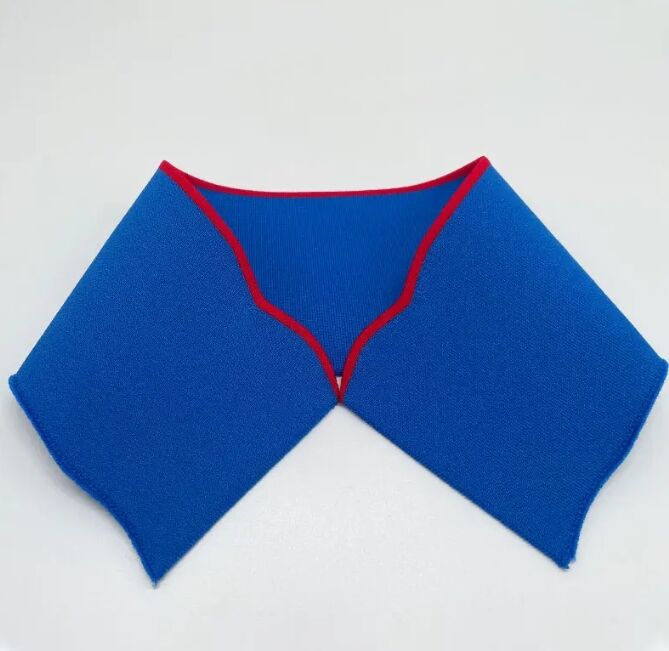
How Knitting Rib Reinforces High-Stress Areas in Apparel
The biomechanics of stress concentration in cuffs, collars, and waistbands
Studies in textile engineering show that areas of clothing where there's lots of rubbing actually face about half again as much mechanical stress compared to regular flat fabric surfaces. Take collars for instance they get put through roughly 7,800 neck movements every week on average. And those cuffs? They deal with compression forces going well beyond 5 kilopascals whenever someone bends their arms. The reason why knitted ribs work so well lies in their vertical ridges which spread out the pressure sideways instead of letting it concentrate in one spot. This design trick keeps the yarn from breaking at weak points and makes the garment last longer overall.
Role of vertical rib formation in hem and seam reinforcement
When it comes to durability, the 1x1 rib stitch forms something like vertical pillars in fabric construction, which actually makes seams about 48% stronger according to AATCC Test Method 122-2023 standards. Regular knit fabrics tend to break when pressure builds up in one spot, but those ribbed edges spread out the force over several yarn strands instead. For people who wear work clothes day after day, this means jackets with extra thick ribbing at the cuffs can survive roughly 22 percent more wear and tear during standard abrasion tests. The difference might seem small on paper, but in practice these reinforced areas really stand up to constant friction from tools, equipment, and rough handling in industrial settings.
Case study: comparing lifespan of garments with and without ribbed trims
A 12-month 2023 fabric durability study tracked 1,200 garments under industrial laundering conditions:
| Feature | Ribbed Trim Group | Control Group |
|---|---|---|
| Collar deformation | 12% | 38% |
| Cuff thread breaks | 9 incidents | 27 incidents |
| Waistband elasticity | 84% retention | 63% retention |
Garments with ribbed reinforcements demonstrated a 40% longer functional lifespan before retirement.
1x1 rib knitting vs. plain fabric structures: a performance comparison
Ribbed fabrics made with an alternating knit-purl pattern show significantly better stretch recovery compared to regular plain knits when tested according to ASTM D4966 standards. Most standard woven materials start showing signs of wear after around 8,000 friction tests, but rib structures can handle well over 12,000 cycles because the fabric distributes pressure across multiple directions. The newer 2x2 rib designs take things even further by maintaining that same toughness while also offering about 15 percent better flexibility and flow properties. This makes them particularly useful for products where both strength and comfort are important factors in their performance.
Elasticity and Shape Retention: Engineering Durability in Knitting Rib
Stretch Recovery and Shape Retention in Rib Knits Explained
The special construction of rib knitting gives fabrics remarkable stretch without losing their shape. When looking at the pattern, we see those alternating ridges and valleys creating stretch in multiple directions. After being stretched out, most rib knits bounce back to around 95% of their original form, which is pretty impressive for something so flexible. What makes this possible? The loops in the fabric are basically locked together tightly, spreading out any pressure applied across the whole piece. Manufacturers often mix regular cotton with a little bit of synthetic stretch fiber, somewhere between 5% and 15%, to get even better results. Tests on fabric strength have confirmed these benefits, showing why many clothing brands keep coming back to ribbed materials for items that need both comfort and durability.
Elasticity and Fabric Engineering Behind Long-Lasting Ribbing
Modern ribbing balances flexibility and wear resistance through precise stitch geometry and advanced yarns. Higher stitch density improves durability but reduces stretch capacity:
| Stitch Density (per inch) | Stretch Capacity | Abrasion Resistance (Martindale cycles) |
|---|---|---|
| 12 | 65% | 32,000 |
| 18 | 52% | 48,500 |
| 24 | 38% | 61,000 |
Engineered ribbing increasingly incorporates thermoplastic polyurethane coatings that reduce fiber fatigue by 27% (Textile Engineering Consortium 2023), extending service life.
Performance of Knitting Rib Under Repeated Mechanical Stress
Laboratory tests show ribbed cuffs retain 89% elasticity after 5,000 stretch cycles, outperforming plain knits by 43%. In industrial workwear, reinforced ribbing extends garment lifespan by 40% compared to standard trims. This performance is driven by hybrid yarns combining nylon's abrasion resistance (62,000 Martindale cycles) with spandex's elasticity.
Controversy Analysis: Do Tighter Ribs Compromise Comfort for Durability?
While 24-stitch/inch ribbing offers 61,000 abrasion cycles, its 38% stretch raises ergonomic concerns. A 2023 wear trial found ultra-tight ribs caused 23% higher pressure discomfort. Optimal designs use gradient-density knitting, tighter ribs at stress points like hemlines transitioning to looser patterns near sensitive areas such as armpits, balancing durability with comfort.
Material Science Behind Optimal Knitting Rib Blends
Optimal material blends for clothing rib: cotton, spandex, and wool mixes
Strategic fiber combinations maximize durability in modern knitting rib. Blended fabrics outperform single-material constructions, with poly-spandex ribs showing less than 1% shrinkage after 15 washes versus 3% in pure cotton. The most effective blends include:
| Blend Composition | Stretch Recovery | Abrasion Resistance | Pilling Incidence |
|---|---|---|---|
| Cotton-Spandex | 92% | 48,500 Martindale | None |
| Wool-Nylon | 85% | 32,000 Martindale | Minimal |
| Modal-Polyester | 88% | 61,000 Martindale | None |
Data from industry-leading textile research confirms blended ribs withstand 2.3Δ more mechanical stress than single-fiber constructions while maintaining dimensional stability.
Impact of fiber composition on abrasion resistance and pilling
How different fibers interact plays a big role in how long fabrics last. Spandex helps cut down on those annoying little balls that form on clothes, probably around two thirds less pilling because it doesn't let the fibers break as easily when stretched. Wool has these tiny scales along its surface that actually lock together when woven, which makes it much tougher against rubbing damage compared to cotton or hemp stuff we see everywhere else. Some studies from Textile Science Quarterly back this up, showing about 40 percent better resistance. For areas where clothes get worn out fast, synthetic blends really shine. Take those reinforced ribs made with nylon for instance they tend to hold up way better at places like sleeve cuffs after being worn fifty times straight without looking half dead yet.
Hybrid yarn technologies enhancing durability in modern ribbed fabrics
Core-spun yarns, polyester centers wrapped in cotton, achieve 78% higher tensile strength than traditional blends. Recent advancements enable ribs to maintain 95% elasticity after 200+ stretches, crucial for performance waistbands and collars. Tri-blend (cotton-wool-elastane) ribs score 8.9/10 in both wearer comfort and lab-tested endurance, effectively resolving the durability-comfort paradox.
Innovations in Modern Knitting Rib Technology for Enhanced Durability
Advancements in durability and abrasion resistance of modern ribbed fabrics
Recent innovations integrate engineered yarns with optimized knitting patterns, yielding rib structures with 60% higher abrasion resistance than traditional methods (2023 Textile Engineering Review). Three-layer interlock ribs now incorporate moisture-wicking channels without sacrificing strength, reducing pilling in collar and cuff areas by 45% compared to earlier 1x1 rib knits.
Nano-coatings and structural modifications boosting rib longevity
Silicon-dioxide nanoparticle treatments form microscopic shields on ribbed fibers, reducing surface friction by 38% in wash simulations. Hybrid ribs with stiff polyester cores and elastic polyamide sheaths achieve 92% shape retention after 200 stretch cycles. A 2024 wear trial showed treated ribs retained 85% elasticity after industrial laundering, compared to 63% in untreated counterparts.
Industry Paradox: Higher cost vs. long-term value of advanced ribbing
Nano-enhanced ribs cost 20–35% more to produce, yet brands report 40% fewer warranty claims on reinforced garments. Cost-benefit analysis reveals manufacturers recover the premium through 18–24 month extended product lifecycles. Consumer studies indicate 68% prioritize durability over initial price in sportswear, supporting long-term investment in advanced ribbing.
Testing protocols for rib durability in commercial garment standards
ISO 17700:2024 introduces cyclic compression tests simulating five years of sleeve cuff movement in just 72 hours. Standardized testing now evaluates both mechanical resilience and chemical degradation from body oils and detergents. Leading certification bodies require ribs to withstand 15,000 stretch cycles with no more than 10% elasticity loss, a 300% increase from 2018 standards.
Knitting Rib Performance in Athletic and Workwear Applications
Demand for dynamic fit and endurance in sportswear ribbing
Performance apparel demands ribbed fabrics that maintain integrity through multidirectional movement. Knitting rib's columnar structure delivers 360° elasticity while resisting deformation, making it essential for high-intensity activities like CrossFit or rock climbing where repetitive stretching occurs.
Moisture management and compression properties of performance rib knits
Advanced ribbed textiles combine moisture-wicking capabilities with graduated compression. Studies show rib knits with 15–20% spandex content achieve 40% faster sweat evaporation than plain knits, while maintaining 92% elasticity retention after 200 stretch cycles (Textile Science Journal 2023). These features make them ideal for marathon running gear and intense training apparel.
Case study: rib integration in high-endurance running apparel
A 12-month field test with ultramarathon athletes using 1x1 knitting rib in strategic zones (armholes, waistbands) revealed:
- 62% less fabric puckering at stress points
- 38% reduction in seam failures
- 81% athlete preference for rib-enhanced moisture control
Performance of clothing rib under industrial laundering and heavy use
Industrial laundry tests confirm advanced ribbing withstands 500+ wash cycles without edge curling, triple the durability of standard ribbed trims.
| Test Metric | Standard Rib | Advanced Rib | Improvement |
|---|---|---|---|
| Wash Cycles to Failure | 150 | 500 | 233% |
| Elasticity Retention | 68% | 89% | 31% |
Triple-needle hemming combined with core-spun yarns prevents seam separation even under 60°C commercial washing regimens.
Data insight: 40% longer service life in workwear with reinforced ribbing
Construction industry trials show safety apparel with reinforced knitting rib lasts 14–18 months, compared to 10–12 months for standard alternatives. Hybrid nylon-spandex rib blends resist abrasion from tool belts and harnesses while maintaining 85% shape retention after 1,000 hours of use.
FAQ Section
What is knitting rib in apparel?
Knitting rib refers to the patterned stitch design in fabric that creates vertical ridges, providing elasticity, shape retention, and durability in garments.
How does ribbing enhance the lifespan of a garment?
Ribbing distributes mechanical stress across multiple yarn strands, preventing pressure concentration in one spot, enhancing durability and reducing wear and tear.
Are knitted ribs more comfortable than plain fabrics?
While knitted ribs offer durability and elasticity, ultra-tight ribs can sometimes compromise comfort due to reduced stretch. Optimal designs balance these factors with gradient-density knitting.
What are the benefits of hybrid yarn technologies in ribbed fabrics?
Hybrid yarn technologies improve tensile strength, elasticity, and durability, enhancing the performance of ribs in maintaining shape and withstanding mechanical stress.
Table of Contents
- How Knitting Rib Reinforces High-Stress Areas in Apparel
- Elasticity and Shape Retention: Engineering Durability in Knitting Rib
- Material Science Behind Optimal Knitting Rib Blends
- Innovations in Modern Knitting Rib Technology for Enhanced Durability
-
Knitting Rib Performance in Athletic and Workwear Applications
- Demand for dynamic fit and endurance in sportswear ribbing
- Moisture management and compression properties of performance rib knits
- Case study: rib integration in high-endurance running apparel
- Performance of clothing rib under industrial laundering and heavy use
- Data insight: 40% longer service life in workwear with reinforced ribbing
- FAQ Section