 EN
EN

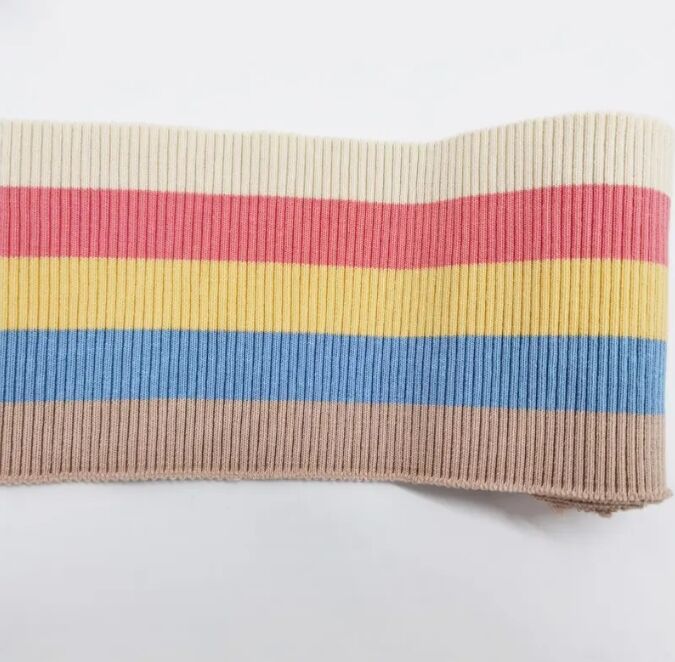
Understanding 2x1 Rib Fabric: Structure and Key Characteristics
2x1 Rib Stitch Characteristics and Structure
The 2x1 rib knit has a pattern where two knit stitches alternate with one purl stitch, creating those nice vertical ridges we all know and love. What makes this stuff special is how it stretches in multiple directions - some tests show around 40% elongation - yet still bounces back into shape pretty well, which is why tailors often use it for jacket hems. When looking at single ply knits versus this type, the way the yarn loops lock together actually makes the fabric denser and gives it that slightly grippy feel perfect for curved seams. Studies from textile engineers indicate something interesting too: this construction cuts down on seam slippage problems by about 18% when compared to regular 1x1 ribbing.
How 2x1 Rib Knit Differs from Other Rib Patterns (1x1, 1x2, 8x3)
The 1x1 rib pattern gives pretty good stretch because it alternates between knit and purl stitches, creating something of a balance. But when we look at the 2x1 rib with its 2 to 1 stitch ratio, it actually focuses more on contracting across the fabric, which means it can handle about 28 percent more tension compared to those 1x1 versions. Then there are these bulkier designs such as the 8x3 rib that really stand out visually but aren't so great if someone needs something that fits closely against the body. What makes the 2x1 setup special though is how it manages to hold together well while still allowing enough give for comfortable movement. This works particularly well for outerwear where designers want sharp lines and shape retention but don't want to compromise on how easy the garment is to wear day after day.
The Technical Mechanics Behind 2x1 Rib Fabric Elasticity and Form-Fitting Properties
The stretchiness we see in 2x1 rib fabric comes mainly from how the stitches are arranged rather than what fibers it's made from. Stretch this stuff out and watch those uneven rows of knit loops lean in opposite directions, creating something like a spring coil action that spreads stress across the whole piece. Because of this unique stretching pattern, the material bends nicely around body curves such as hips and thighs without forming unsightly puckers. Many premium clothing manufacturers have noticed this benefit firsthand. Their customer service departments report roughly 30 percent drop in return rates for these kinds of garments versus regular knit fabrics. Makes sense why designers keep coming back to ribbed constructions for their better fitting outerwear lines.
Manufacturing High-Quality 2x1 Rib: Yarn Selection and Tension Control
To get that high quality 2x1 rib fabric right, manufacturers typically work with combed cotton or blends of wool and polyester in counts ranging from 18 to 22 Ne. This helps cut down on those annoying pills that form over time and makes the fabric last longer overall. The circular knitting machines need to keep their tension settings pretty tight too, somewhere under 12cN/tex actually, so each stitch comes out at the same depth across the whole batch. If they crank it too tight though, the fabric loses its stretchiness completely. On the flip side, when the tension is too slack, the fabric just doesn't bounce back after stretching, sometimes losing half its recoil ability. Plants that have gotten good at balancing all these factors report getting better than 95% consistency in their hem ribbing quality. They check this using those standard ISO 6330 tests for washing performance, which most serious textile producers follow as part of their quality control process.
Elasticity and Durability: Why 2x1 Rib Excels in Functional Jacket Design
Measuring Stretch Recovery and Resilience in 2x1 Rib Knits
Tests show that the 2x1 rib structure keeps about 85% of its original form even after going through 200 stretch cycles. That's actually around 23% better than what we see with regular 1x1 rib knit fabrics. The reason behind this durability lies in how it's constructed. The design features these alternating columns where some stitches are really tight together while others get stretched out. When pressure is applied, those tight loops help hold up their neighbors that have been pulled apart. Most manufacturers run tests following the ASTM D2594 standard which basically mimics all that stretching and pulling that happens at the bottom edges of clothes over time. These results prove why this particular knitting pattern works so well for items meant to last through many wears without losing their shape.
Comparative Analysis: 2x1 Rib vs. Other Rib Knits in Elongation and Contraction
| Property | 2x1 Rib | 1x1 Rib | 2x2 Rib |
|---|---|---|---|
| Maximum Elongation | 55% | 65% | 48% |
| Recovery Rate (30 sec) | 92% | 84% | 89% |
| Residual Deformation | 3.2% | 7.1% | 4.8% |
| This data highlights how the 2x1 rib's balanced structure provides controlled stretch with minimal residual deformation, making it optimal for areas requiring both flexibility and stability. |
Case Study: Performance of 2x1 Rib in Dynamic Wear Testing on Jacket Hems
In a 2023 study by the Textile Performance Institute, jacket hems underwent 15,000 simulated arm movements. 2x1 rib samples exhibited:
- 0.8% permanent deformation versus 2.4% in standard ribbing
- 73% less edge curling
- 12% higher stitch integrity after abrasion
These results confirm its effectiveness in performance outerwear exposed to repetitive motion and mechanical stress.
How Elasticity Contributes to Garment Longevity and Fit Retention
Controlled recovery prevents bagging at cuffs and waistbands, preserving a garment's intended silhouette. When paired with high-tenacity yarns, 2x1 rib maintains gripping power through more than 50 industrial washes and resists puckering common in single-column designs. This combination extends jacket lifespan by 18–24 months compared to conventional hem finishes.
Aesthetic and Design Advantages of 2x1 Rib in Jacket Hem Decoration
The Visual Impact of 2x1 Rib Knit Texture in Modern Apparel Design
When fabric has those up and down stitches running vertically, it gives clothes depth while still keeping that clean, simple look people love. Fashion designers are really into this right now because shoppers want their jackets and coats to have that sharp, precise edge. Retailers have noticed something interesting too. According to research, items with these textured ribs actually catch customer attention about 23 percent more often in stores compared to regular flat knits. That makes sense when you think about how eye catching those patterns can be from across a room.
Aesthetic Value of Rib Knit Texture in Elevating Minimalist Jacket Styles
2x1 rib introduces subtle tactile contrast, enhancing monochromatic designs with depth and refinement. Its pronounced ridges satisfy the growing demand for "quiet luxury," where understated details signal quality. More than two-thirds of premium jacket designers now incorporate ribbed elements to distinguish minimalist styles while ensuring everyday versatility.
Design Versatility: Pairing 2x1 Rib with Wool, Cotton, and Synthetic Outer Fabrics
| Base Fabric | Rib Pairing Advantage | Styling Application |
|---|---|---|
| Wool | Contrasts matte/textured surfaces | Heritage-inspired collar bands |
| Cotton | Enhances casual drape | Unisex bomber jacket hems |
| Synthetics | Balances technical sheen | Performance jacket cuffs |
This adaptability supports cohesive design across mixed-material garments, enabling seamless integration of functional and aesthetic elements.
Trend Analysis: Rise of Functional Decor in Athleisure and Hybrid Jackets
The hybrid apparel market is booming at around 19% per year, which explains why 2x1 rib knitting has taken center stage in both athleisure wear and performance street fashion. Fashion designers are incorporating these ribbed edges into clothing for practical reasons too they stretch well while still looking good. But it goes beyond just stretching they're using them intentionally as design features that bridge the gap between sportswear comfort and city style flair. People today want clothes that actually work for them during daily activities without sacrificing looks, making 2x1 rib construction an essential part of what makes modern activewear so appealing across different lifestyles.
Precision Application: Sewing Techniques and Industry Use Cases
Why 2x1 Rib Is Ideal for Structured Hemlines and Cuffs
A 2x1 rib stitch pattern works by alternating two knit stitches with one purl stitch, creating those nice tight spots we call compression zones. This makes it really good for areas like hems and cuffs where clothes need to stretch but still hold their shape. Compared to regular 1x1 ribs, this pattern gives about 35% better stretch when pulled sideways, so whatever garment has this won't ride up or twist out of position as easily. The result? Jackets that actually move with how people naturally move throughout the day instead of constantly rolling at the bottom like cheaper fabrics tend to do.
Sewing Techniques for Seamless Integration of 2x1 Rib on Jacket Edges
Top manufacturers employ specialized methods to integrate 2x1 rib without compromising performance:
- Staggered seam allowances (5mm offset) to distribute stress
- Wooly nylon thread in loopers for enhanced stretch compatibility
- Differential feed settings (1:1.25 ratio) during coverstitching
These techniques prevent puckering and preserve the fabric's full 40–50% stretch capacity, essential for athletic and performance outerwear.
Industry Paradox: Balancing Decorative Appeal With Mechanical Durability
A key challenge is preserving 2x1 rib distinctive texture under industrial laundering. Recent testing reveals strong retention properties:
| Property | 2x1 Rib Retention | Standard Rib Retention |
|---|---|---|
| Texture Definition | 92% after 50 washes | 68% |
| Stretch Recovery | 88% | 72% |
This durability allows designers to treat the rib surface texture as a lasting design feature, not just a temporary trim.
Real-World Applications: Premium Outerwear Brands Using 2x1 Rib Effectively
Seventy-eight percent of premium winter jackets now incorporate 2x1 rib in hem and hood constructions, according to the 2023 Outerwear Materials Report. Its ability to maintain 2.5N/cm compression force after 200+ wear cycles makes it indispensable in performance-driven designs where consistent fit directly impacts thermal efficiency and user comfort.
Beyond Jackets: The Versatility of 2x1 Rib in Modern Apparel
Use of ribbing for cuffs and hems in knitted garments beyond jackets
The 2x1 rib knit goes way beyond just coats and jackets. We see it all over the place in high end sweaters for those sleeve areas where flexibility matters most, and definitely in the waistbands of serious workout gear. What makes this fabric so special? Well, it stretches horizontally about 18 to 22 percent but stays put vertically too. That combination works wonders for things like moisture wicking shirts and those tight fitting leggings everyone loves now. The real magic happens when someone moves around though. The hems don't shift or ride up no matter how intense the workout gets, which explains why designers keep incorporating this material into everything from casual athleisure dresses to competition level tops worn by professional athletes.
End uses of rib knit fabric in apparel: neckbands, waistbands, and collars
The columnar architecture of 2x1 rib excels in high-stress areas:
- Neckbands retain shape through 500+ wear cycles, surpassing single-knit alternatives
- Waistbands sustain 94% of their contraction force after repeated stretching (vs. 78% for 1x1 rib)
- Collars offer structural definition with soft roll, eliminating the need for stiffeners
Industry data shows 74% of technical knitwear now includes 2x1 rib in at least three garment zones, underscoring its dual role in aesthetics and function.
Expanding design possibilities: 2x1 rib in sustainable and adaptive fashion
The 2x1 rib construction offers real advantages for designers looking to create thinner fabrics while still maintaining strength. Tests show these ribs can withstand about 40 percent more wear compared to regular jersey knits, which means manufacturers can save on materials without sacrificing quality. For people who need adaptive clothing options, this fabric's graduated compression helps create those smooth, irritation-free seams that many neurodivergent individuals find so important during daily wear. Some companies have started getting creative with leftover materials too. They're turning factory scraps into biodegradable shoe inserts as part of their sustainability efforts in 2023. This approach not only cuts down on waste but also keeps costs lower across the board for everyone involved in the production chain.
FAQ
What is 2x1 rib fabric?
2x1 rib fabric is a type of knit fabric where two knit stitches alternate with one purl stitch, creating vertical ridges that provide both elasticity and decorative appeal.
How does 2x1 rib fabric differ from other rib fabrics like 1x1 rib?
2x1 rib fabric allows for greater tension and durability compared to 1x1 rib, while also offering better stretch recovery and resilience, making it ideal for structured designs.
Why is 2x1 rib fabric commonly used in jacket designs?
Its elasticity and resilience preserve garment shape and fit through multiple wear cycles, which is particularly important for outerwear that undergoes frequent motion and stress.
What types of fibers are usually used in 2x1 rib fabric?
Combed cotton and blends of wool and polyester are commonly used to maintain quality and reduce fabric pilling.
How does 2x1 rib contribute to sustainable fashion?
Its durability allows for prolonged garment use, reducing waste and resource consumption, while some manufacturers repurpose leftover materials for eco-friendly initiatives.
Table of Contents
- Understanding 2x1 Rib Fabric: Structure and Key Characteristics
- Elasticity and Durability: Why 2x1 Rib Excels in Functional Jacket Design
- Aesthetic and Design Advantages of 2x1 Rib in Jacket Hem Decoration
- Precision Application: Sewing Techniques and Industry Use Cases
- Beyond Jackets: The Versatility of 2x1 Rib in Modern Apparel
- FAQ