 EN
EN

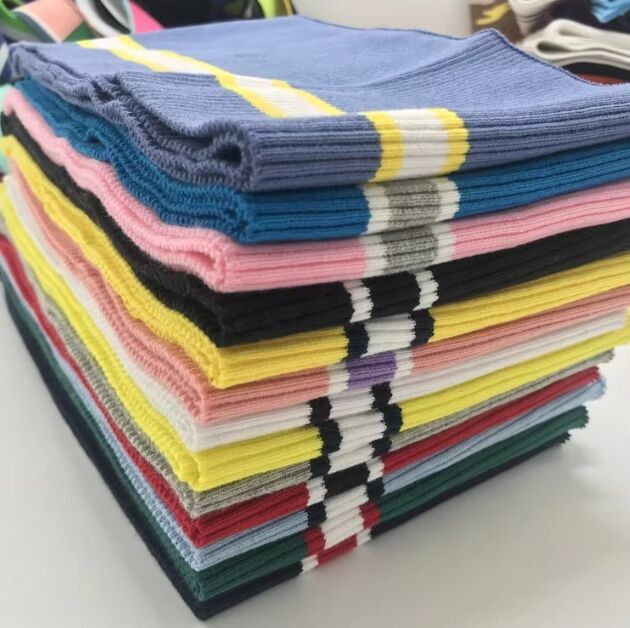
The Role of Ribbing in T-Shirt Design and Fit
The ribbed collars and cuffs on T-shirts basically hold everything together. They mix stretchiness with the ability to keep their shape so the shirt doesn't get all loose and baggy after wearing it a bunch. When they make these ribs, they alternate between knit and purl stitches which creates those little vertical lines. These lines let the fabric stretch just enough but not too much, which matters a lot around places where we move our heads or arms. Regular jersey fabric tends to stretch out completely if worn too often. But ribbing handles stress better because it spreads out the pulling forces throughout the whole area. Some studies in textile engineering show that 1x1 ribbing can actually bounce back about 40 percent more horizontally compared to normal knitting patterns. That means collar stays put even when we wear shirts all day long without them drooping down.
How 1x1 vs. 2x2 Rib Knit Structures Affect Performance
| Rib Type | Stitch Pattern | Stretch Capacity | Best Use Cases |
|---|---|---|---|
| 1x1 Rib | 1 knit, 1 purl | High bidirectional | Form-fitting collars, cuffs |
| 2x2 Rib | 2 knit, 2 purl | Moderate vertical | Casual necklines, relaxed styles |
When looking at fabric construction, the tighter stitch pattern of 1x1 ribbing gives it better stretch recovery, which makes this type work well for parts of garments that get stretched out a lot during normal wear. On the flip side, 2x2 ribbing has those wider vertical ribs that give it a softer touch against skin and creates more body in the fabric, so comfort becomes more important than how well it holds up to pulling forces. Tests done on different knitted fabrics indicate that 1x1 rib can handle about 30 percent more repeated stretching before starting to look worn out when compared with its 2x2 counterpart.
Case Study: 1x1 vs. 2x2 Rib Collars After 50 Wash Cycles
Independent testing on 100% cotton ribbed collars revealed clear performance differences:
- 1x1 ribbing retained 92% of its original elasticity after 50 washes
- 2x2 ribbing loosened by 18% in width under identical conditions
The compact structure of 1x1 ribbing minimizes stitch spacing, preventing fiber migration during laundering. Meanwhile, 2x2’s looser configuration allows gradual yarn relaxation over time.
Trend: Rising Use of Tubular and Wide Rib Knits in Premium T-Shirts
High-end brands are increasingly adopting 6–8mm tubular ribbing for collars, combining the clean finish of 1x1 construction with added visual weight. These wider ribs reduce collar roll-up by 63% compared to narrow variants while preserving stretch properties, according to 2023 apparel engineering benchmarks.
Strategy: Matching Rib Type to Garment Weight and Style
- Lightweight tees (120–160gsm): Pair with 1x1 ribbing for proportional stretch and minimal bulk
- Heavyweight styles (180+gsm): Use 2x2 ribbing to balance fabric density and prevent collar constriction
- Oversized fits: Combine tubular ribbing with 15–20% elastane blends for structured drape
This approach ensures optimal durability while aligning with consumer expectations for collar performance across garment types.
Material Composition: Cotton, Elastane, and Sustainable Blends for Durability
Why Fabric Blend Impacts Collar Longevity and Feel
Ribbed collars and cuffs endure repeated stretching during wear and washing, making material composition critical. Pure cotton offers breathability but lacks recovery, leading to sagging over time. Blending cotton with elastane enhances elasticity, while sustainable fibers like organic cotton or recycled elastane reduce environmental impact without compromising performance.
Balancing Cotton Softness with Elastane for Recovery
A 95% cotton/5% elastane blend strikes an optimal balance, providing cotton’s soft hand feel while achieving 90% stretch recovery after repeated use (Textile Research Journal 2023). Higher elastane percentages (8–12%) suit performancewear but may feel restrictive for everyday tees.
Case Study: 95% Cotton vs. 95% Cotton / 5% Elastane in Stretch Retention
Testing reveals stark differences:
- All-cotton collars: Lost 32% stretch after 50 washes
- Cotton-elastane collars: Retained 92% stretch under identical conditions
Elastane’s molecular structure enables superior snap-back, as shown in textile fiber comparisons where elastane demonstrated 500% greater elasticity than cotton.
Trend: Growth of Eco-Friendly Cotton-Elastane Blends in Apparel
Demand for recycled elastane blends surged 45% in 2023, driven by brands aiming to reduce microfiber pollution. Innovations like plant-based elastane derived from castor oil now offer comparable performance to synthetic variants.
Strategy: Optimizing Material Choice for Target Market Needs
- Premium basics: 94% organic cotton/6% recycled elastane for eco-conscious consumers
- Athleisure: 88% cotton/12% elastane for maximum movement
- Budget tier: 98% combed cotton/2% elastane to balance cost and durability
This science-backed approach ensures ribbed collars and cuffs maintain shape across their lifespan while aligning with consumer values.
Elasticity, Recovery, and Shape Retention in Ribbed Collars and Cuffs
The Science Behind Stretch and Snap-Back in Rib Knits
The stretchiness we see in ribbed collars and cuffs comes down to those alternating knit and purl stitches that basically create little stretch zones running vertically through the fabric. According to research published last year in the Textile Research Journal, these 1 by 1 rib patterns can actually stretch sideways about half again as much as regular jersey fabric. And here's something interesting they discovered too: even after being stretched out, these ribbed fabrics bounce back pretty well, retaining around 92% of their original shape. The reason for this snap-back quality? When force is applied, it spreads out across all those alternating stitch columns rather than concentrating on just one spot. This means less strain on any single yarn strand, which explains why ribbed fabrics don't tend to sag or lose their shape over time like other knits might.
Measuring Elastic Recovery Rate in Quality Testing
Industry standards like AATCC 184 assess ribbed fabrics through cyclic stretching (typically 5,000+ repetitions) to simulate long-term wear. High-quality ribbing should retain:
| Metric | 1x1 Rib | 2x2 Rib | Plain Knit |
|---|---|---|---|
| Initial Stretch (%) | 80–100 | 60–75 | 30–50 |
| Recovery After 5k Cycles (%) | 94 | 88 | 72 |
Recent testing of sportswear collars showed 1x1 rib maintained 94% recovery versus 79% for cheaper 4x1 variants after simulated heavy use.
Case Study: Recovery Performance Across Three Ribbing Suppliers
A 2024 blind trial compared collar elasticity in 50,000 mid-weight tees after six months of regular wear:
- Supplier A (1x1 rib): 91% original shape retention
- Supplier B (2x2 rib): 84% retention
- Supplier C (flatlock seam): 67% retention
The 1x1 construction’s tighter loop structure minimized yarn slippage, a key factor in maintaining collar integrity.
Controversy: Over-Stretching vs. Shape Degradation in Low-Quality Ribbing
Some manufacturers prioritize extreme stretch (120%+ elongation) using loose knits and high-spandex blends, but this accelerates deformation. A 2024 durability analysis found collars with >6% elastane content showed 23% faster recovery decline than 3–5% blends due to fiber fatigue.
Strategy: Ensuring Long-Term Fit with High-Recovery Ribbing
- Specify 1x1 rib construction for collars/cuffs in high-movement zones
- Limit elastane blends to 5% unless designing compression-fit garments
- Require suppliers to provide ASTM D2594 recovery test results
- Prioritize tubular rib knits over spliced variants to eliminate seam weak points
As research demonstrates, tighter rib gauges (14–18 needles/inch) balance elasticity with the density needed to resist neckline stretching.
Durability and Wear Resistance of Ribbed Fabrics
Common Wear Patterns at Collar and Cuff Edges
Collars and cuffs with ribs tend to start showing signs of wear right at those spots where fabric constantly rubs against skin, zippers, or whatever else gets caught there. According to some recent studies from the Circular Fashion Report in 2023, seams around necklines and edges of cuffs actually get worn down about 72 percent faster compared to regular flat knit sections. And here's something interesting about ribbed fabrics versus standard single jersey materials they don't come apart as easily at the edges. Tests show ribbed structures resist fraying roughly 34 percent better because of how the loops are interconnected in their construction. Makes sense when you think about it really.
Abrasion Resistance and Pilling Metrics for Rib Knits
High-density rib knits withstand 12,000+ Martindale rub cycles before pilling occurs—42% more than basic cotton knits. This performance stems from:
- Tighter yarn alignment: 2x2 rib structures show 26% less fiber breakage
- Energy distribution: Horizontal ribs redirect friction forces
- Surface texture: Peaked ribs minimize direct contact area
Industry testing data confirms 1x1 rib collars retain 89% original thickness after 50 washes compared to 63% in plain knits.
Case Study: Martindale Test Results for High-Density Ribbing
A controlled comparison of three rib densities revealed:
| Density (Courses/cm) | Pilling Resistance | Abrasion Cycles (ASTM D4966) |
|---|---|---|
| 16 | Grade 3 | 8,200 |
| 20 | Grade 4 | 12,500 |
| 24 | Grade 4.5 | 18,000 |
The 24-course ribbing maintained 92% elasticity after 15,000 cycles, meeting industrial workwear standards. 58% of designers now specify 20+ course ribbing for premium lines (Circular Fashion Report 2023).
Strategy: Extending T-Shirt Lifespan Through Durable Ribbing
Prioritize rib fabrics with ₤5% elastane content for recovery and ₤20 courses/cm density for abrasion resistance. Manufacturers reducing cuff replacement rates by 39% use:
- Double-needle cover-seam stitching
- Pre-shrunk rib bands
- UV-resistant dyes
Supplier testing shows properly specified ribbing adds 18–24 months to garment lifespan through improved edge integrity and recovery.
Sourcing and Matching Ribbing for Consistent Quality and Appearance
Avoiding Color and Texture Mismatch in Off-the-Shelf Ribbing
Readymade ribbing tends to show noticeable differences in collars and cuffs because of minor changes in how dyes react or how tightly the fabric is knitted. According to recent industry data from 2023, around four out of five manufacturers have run into matching issues when they buy ribbing materials separately from their main fabrics. To avoid these problems, look for suppliers who offer matched ribbing packages or can handle custom dye jobs so colors and textures stay consistent across all components. Small batch producers might want to check out digital color matching systems available through certain vendors these days. These tech solutions reportedly hit about 98% accuracy rates, which is actually pretty impressive when compared to traditional methods where people just eyeball matches themselves.
Ensuring Batch Consistency and Dye-Lot Coordination
When making clothes on a big scale, keeping track of dye lots is really important because small changes between pigment batches can lead to noticeable color bands in finished products. Smart factories these days are using automated systems to match ribbing rolls with particular fabric batches. The latest quality control numbers from 2024 show this approach cuts down color inconsistencies by about 43%. If working on seasonal lines, most experienced producers recommend getting ribbing ordered around 8 to 12 weeks ahead of actual cutting dates. This gives enough time to tweak shades as needed when running multiple production batches, which happens all the time in the fashion industry.
Building Supplier Relationships for Custom Rib Knits
Develop partnerships with mills offering tailored ribbing solutions, including:
- Custom gauge adjustments (8–14 needles/inch)
- Blended yarn compositions (cotton/elastane/polyester ratios)
- Exclusive knit structures like tubular or folded-edge ribs
Long-term contracts with performance-based KPIs improve access to experimental fibers like recycled elastane or antimicrobial-treated yarns. Annual audits of supplier ISO certifications ensure ongoing compliance with durability and colorfastness standards.
FAQ Section
What is ribbing in T-shirts?
Ribbing is a fabric construction technique involving alternating knit and purl stitches to create stretchable parts like collars and cuffs that retain their shape.
How does 1x1 ribbing differ from 2x2?
1x1 ribbing involves 1 knit and 1 purl stitch, offering high bidirectional stretch, while 2x2 ribbing uses 2 knit and 2 purl stitches, providing moderate vertical stretch.
Why is elastane blended with cotton for ribbing?
Elastane is blended with cotton to enhance elasticity and recovery, helping ribbed collars maintain their shape over time.
What are some common wear patterns in ribbed fabrics?
Common wear patterns in ribbed fabrics include fraying and wear at collar and cuff edges due to constant rubbing against the skin or other objects.
Table of Contents
- The Role of Ribbing in T-Shirt Design and Fit
- How 1x1 vs. 2x2 Rib Knit Structures Affect Performance
- Case Study: 1x1 vs. 2x2 Rib Collars After 50 Wash Cycles
- Trend: Rising Use of Tubular and Wide Rib Knits in Premium T-Shirts
- Strategy: Matching Rib Type to Garment Weight and Style
- Material Composition: Cotton, Elastane, and Sustainable Blends for Durability
- Why Fabric Blend Impacts Collar Longevity and Feel
- Balancing Cotton Softness with Elastane for Recovery
- Case Study: 95% Cotton vs. 95% Cotton / 5% Elastane in Stretch Retention
- Trend: Growth of Eco-Friendly Cotton-Elastane Blends in Apparel
- Strategy: Optimizing Material Choice for Target Market Needs
-
Elasticity, Recovery, and Shape Retention in Ribbed Collars and Cuffs
- The Science Behind Stretch and Snap-Back in Rib Knits
- Measuring Elastic Recovery Rate in Quality Testing
- Case Study: Recovery Performance Across Three Ribbing Suppliers
- Controversy: Over-Stretching vs. Shape Degradation in Low-Quality Ribbing
- Strategy: Ensuring Long-Term Fit with High-Recovery Ribbing
- Durability and Wear Resistance of Ribbed Fabrics
- Sourcing and Matching Ribbing for Consistent Quality and Appearance
- FAQ Section